
NBA Sport Betting · UK Guide
NBA Sport Betting in the UK: A Data-First Guide for British Punters
UK-licensed NBA betting, decoded by the data.
Loading...
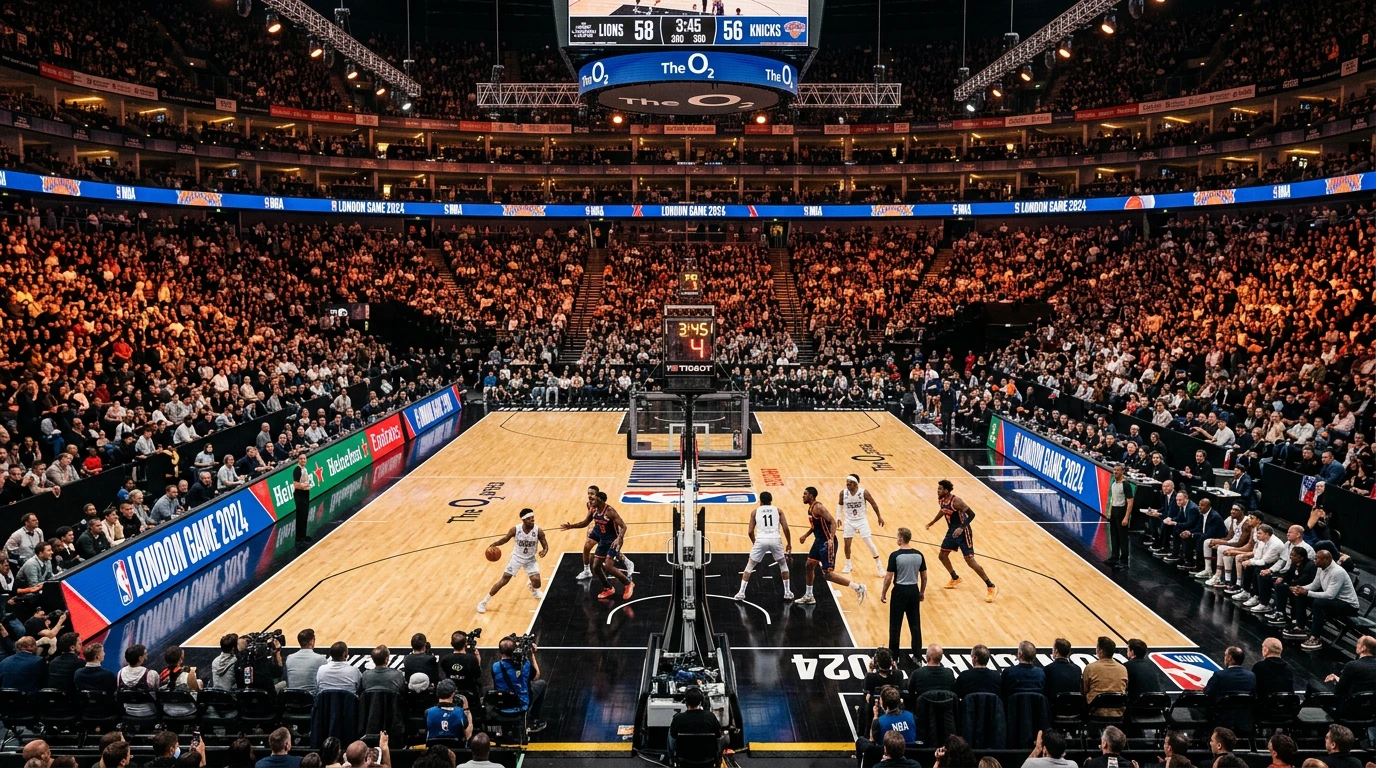
On 18 January 2026 I sat upstairs at The O2, watching Orlando and Memphis trade hardwood in front of a record London Game crowd, and I realised something had shifted under my feet. Nine years writing about NBA markets in this country and I had never seen British punters look this serious before tip-off. The bloke next to me had a Cooper Flagg points line written on the back of his programme. The two women in front were debating whether the Magic would cover the spread without their starting centre. None of those conversations existed at NBA London 2018.
This is nba sport betting in 2026, and the British appetite for it has caught operators flat-footed. NBA viewership on Prime Video in the UK climbed 444 per cent year on year during the 2025-26 regular season after the league's eleven-year broadcast contract with Amazon kicked in last October. That is not soft growth. That is a media reset.
I wrote this guide for the punter who knows football inside out and is now trying to figure out why an NBA bet builder pays so differently from an acca on three Premier League matches. The grammar is similar. The texture is not. NBA games run faster, settle differently on overtime, and pull in a far heavier weight of player props than anything in domestic football. The integrity story behind those props matters more than most British operators will admit.
Across the next 5,000 words or so I will walk you through market size, the actual shape of UK gambling around basketball, the bet types you will meet at a UKGC-licensed sportsbook, why two-way contract restrictions exist, where live betting traps newcomers, and the bankroll discipline I wish someone had drilled into me in 2017. No promo codes. No leaderboards of operators. Just the picture as I have learned to read it.
The Prime Video backdrop
The NBA's eleven-year broadcast partnership with Amazon Prime Video began in October 2025, with regular-season and NBA Cup coverage running on the same platform UK households already use for delivery and films. UK viewership of NBA matches on Prime jumped 444 per cent year on year in 2025-26. Every bookmaker in the country is repricing inventory around that audience.
Five things to know before you bet on the NBA from the UK
- The UK gambling industry produced £16.8 billion in gross gambling yield in 2024-25, with online betting running at £596 million in a single quarter; basketball sits inside the non-football slice but is the fastest-growing sub-market.
- Only UKGC-licensed operators can legally take your bets in the UK, and they are now subject to a 1.1 per cent statutory levy on online GGY introduced in April 2025.
- The five core NBA markets are moneyline, point spread, totals, player props and futures; bet builders are accumulators within a single game.
- Following the October 2025 federal indictments of Terry Rozier and Chauncey Billups, UK books have tightened prop restrictions, especially on two-way and ten-day contract players.
- Unit sizing and deposit limits matter more than picks; the 18-24 age bracket is the most exposed group with 21.9 per cent at some level of gambling risk.
The UK market is bigger than your mates think
Ask a friend down the pub how much money rolls through British gambling each year and you will get guesses in the low single billions. The actual figure for the financial year ending March 2025 is £16.8 billion in gross gambling yield, up 7.3 per cent year on year. Most punters underestimate the scale because what they see on the High Street is a handful of bookies and the lottery counter at Tesco. The real shape of the industry sits inside people's phones.
£16.8bn
Total UK gambling GGY, April 2024 – March 2025
13.5m
Average monthly active online accounts, Q4 2024-25
£17bn
UK sports betting market projection for 2030 at 11.4 per cent CAGR
1.1%
Statutory levy on online operators since 6 April 2025
Remote gambling — anything online or in an app — generated £7.8 billion of that total, up roughly £900 million on the previous year. The active monthly account base reached 13.5 million in early 2025. Those are not 13.5 million distinct people because plenty of punters hold accounts at three or four operators, but it is a useful proxy for how online the market has become. UK sports betting alone is projected to reach roughly £17 billion by 2030 at an 11.4 per cent compound rate.
Football and horse racing dominate the betting handle. The Gambling Commission's own remote-betting breakdown for 2023-24 put football at £1.1 billion and horse racing at £771 million, with everything else — basketball, tennis, golf, esports, snooker, the lot — splitting the remaining £2.4 billion. NBA betting still slips into that residual, but inside the residual it is growing faster than anything else with cross-Atlantic appeal.
The structure of the industry matters because it tells you what kind of operator you are dealing with. UKGC-licensed firms compete with each other and with a stubborn unregulated grey market. The Betting and Gaming Council, which represents licensed operators, estimates the unlicensed market sat at around £16.6 billion in 2025, almost the same scale as the regulated one, and roughly three times its 2019 level. The regulated channel share has slipped from 97 per cent in 2019 to 92 per cent in 2025. Every percentage point lost to the black market is a percentage point of consumer protection lost as well.
Why this matters for an NBA punter
The products you would naturally use for basketball — accas, bet builders, in-play overtime markets — only exist as regulated products at UKGC-licensed sportsbooks. The unlicensed sites that fly in front of you on Google ads are not bound by deposit limits, levy contributions or affordability checks. If something goes wrong, you have no consumer protection. None.

Across the rest of this piece I will refer back to the £16.8 billion figure quite a few times, mostly to put NBA-specific bits in proportion. Basketball remains a small slice of the British betting pie, but the pie itself is enormous, and the slice is widening fast.
British eyeballs are finding the hardwood
My mate Adrian had never watched a quarter of basketball in his life until late 2024. By the end of the 2025-26 regular season he was sending me texts at two in the morning about pick-and-roll defence and asking why Wembanyama was steaming on assists. He is forty-one years old, lives in Reading, drinks too much tea and has bet on football for two decades. He is now the median UK NBA punter, and there are hundreds of thousands like him.
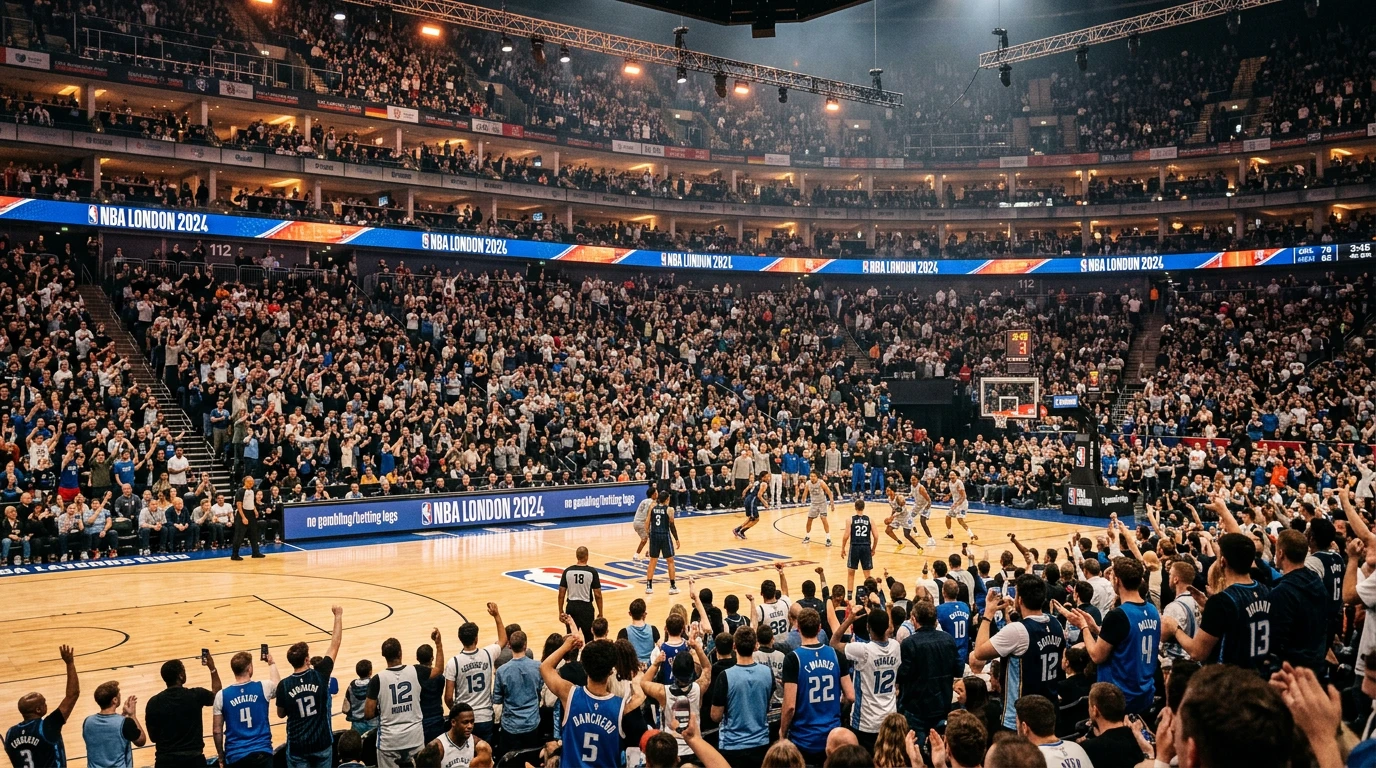
The numbers behind that shift are louder than anything I have heard in nine years following this market. The NBA London Game in January 2026 sold out The O2 with 18,424 paying customers watching Orlando and Memphis. That match became the most-watched single NBA broadcast in UK history, with viewership up 90 per cent on the previous London Game in 2019.
18,424 fans packed The O2 for Magic versus Grizzlies on 18 January 2026 — the highest UK NBA attendance ever, with viewership up 90 per cent on London Game 2019.
Prime Video deserves the loudest share of credit. NBA viewership on the platform in the UK rose 444 per cent year on year in 2025-26. That is the kind of growth curve that gets sports-rights executives revising their five-year plans. The eleven-year contract that placed regular-season games and the entire NBA Cup on Prime kicked in last October, and it transformed how British fans actually get the games. There is no satellite subscription. No clunky league pass workaround. You open the same app you use to watch The Boys, and Steph Curry is right there.
The Prime Video deal in one paragraph
Eleven years. Started October 2025. Regular season, NBA Cup, conference finals and All-Star Weekend. The first Amazon-exclusive NBA Cup Final in December 2025 averaged 3.07 million viewers in the US alone. In the UK, the deal collapsed the access friction that used to keep casual fans out — and that friction is exactly what kept British NBA betting niche for fifteen years.
Demand is showing up away from screens too. The 2025-26 regular season set a three-year attendance record across all NBA arenas, with 22.18 million fans through the gates over the 2023-24 to 2025-26 window. Globally consumed live NBA content during 2025-26 passed 1.3 billion hours, up 93 per cent year on year. The sport is on a near-vertical engagement curve, and the British share of that audience is growing faster than almost any other major market outside North America.
In England specifically, the government and the NBA have committed a combined £10 million to youth basketball infrastructure: £5 million from the Treasury for 2026-27 and £5 million from the league through 2028, announced last September. That money is not aimed at me or you. It is aimed at the next generation of fans, and the operators are already pricing it in.
What the betting industry sees in all of this is straightforward. A young, mobile-first sport gaining a media platform with delivery scale, attached to a UK gambling base of 13.5 million online accounts, all of it underpinned by a regulator that requires UKGC licensing to take a single bet. The result is that NBA odds on British sportsbooks are getting sharper, the bet-builder menus are getting deeper, and the integrity conversation is getting louder. I will get to that conversation a bit further on.
The five markets that cover almost everything you will want to bet
The first time I tried to read an NBA card at a UK bookmaker in 2017 it was a mess of formats, abbreviations and lines that moved while I was watching. Eight years on the structure is much clearer because most operators settled on a similar menu, regardless of whether you log in via a familiar British brand or one of the international books. Five market families do most of the work. Everything else is a variation.
| Market | What you back | Why punters use it |
|---|---|---|
| Moneyline | The winner of the game outright | Cleanest read on form, easy to size, no point handling |
| Point spread | The winner against a margin set by the bookmaker | Brings short prices on heavy favourites back into shape |
| Totals | Combined points over or under a posted line | Pace-based reading, no need to pick a side |
| Player props | An individual player's stat output | Player-by-player edge, role-specific reads |
| Futures | Long-term outcomes such as Championship Winner or MVP | Early-season value when consensus has not formed |
Football punters will recognise moneyline as the equivalent of a straight match-result bet, only without the draw because basketball cannot end level after overtime. Spread betting is similar to handicap markets in Premier League football, but the lines are wider, often six to fourteen points, because NBA scoring volume is so much higher. Totals, often listed as over/under, work exactly like in football — combined points instead of combined goals — and are typically pitched in the 220 to 235 range for an average modern game.
Player props are where the NBA market gets genuinely deep. A single game on a UK book will carry 200 to 600 individual prop lines covering points, rebounds, assists, threes made, steals, blocks, double-doubles, triple-doubles, fantasy-style combos and anything else that can be counted on a stat sheet. This depth is precisely what attracts smart money and why integrity rules around two-way and ten-day contract players have tightened. I will get to all of that in the props section.
Futures markets — outrights in UK English — sit at the slower end of the menu and pay you out at the end of the season, the conference or the playoffs. Championship Winner is the headline ticket. Conference Winner, Division Winner, MVP, Rookie of the Year and Sixth Man also trade actively. Most experienced punters carry one or two long-running futures positions through the year, sized small.
Accumulators in the British sense — what Americans call parlays and what most UK operators now market as bet builders when restricted to a single game — let you stack two or more selections at multiplied odds. The trade-off is brutal: variance multiplies faster than expected value if you are not selective. The American sportsbook average hold percentage on parlay-style products climbed from 6.7 per cent in 2018 to over 9 per cent in 2024-25, and the same maths applies to UK acca menus.
On the wider US sports-betting landscape, basketball — NBA plus college — drives roughly 28 per cent of national betting handle in 2024, sitting just behind American football. The UK figure for basketball share is much lower, but the rate of change is much higher. Full breakdown of NBA betting markets goes through each of these in working depth, with examples, line-reading walk-throughs and the typical mistakes that catch newcomers.
I usually tell people to ignore four of these markets in their first month and live entirely on moneyline and totals. Build the read. Earn the props later.
The odds will look strange before they make sense
American odds confuse more new UK punters than any other single concept in NBA betting, and they will keep doing so until you actually have to settle a bet at +135 or -180. The good news is the UK market gives you a choice. Most British operators default to fractional or decimal for nba betting odds uk customers, but when you read US-based analysis or watch a Prime Video broadcast, the prices flash up in American format. You need to read all three by the end of the season.
Fractional
5/4
Decimal
2.25
American
+125
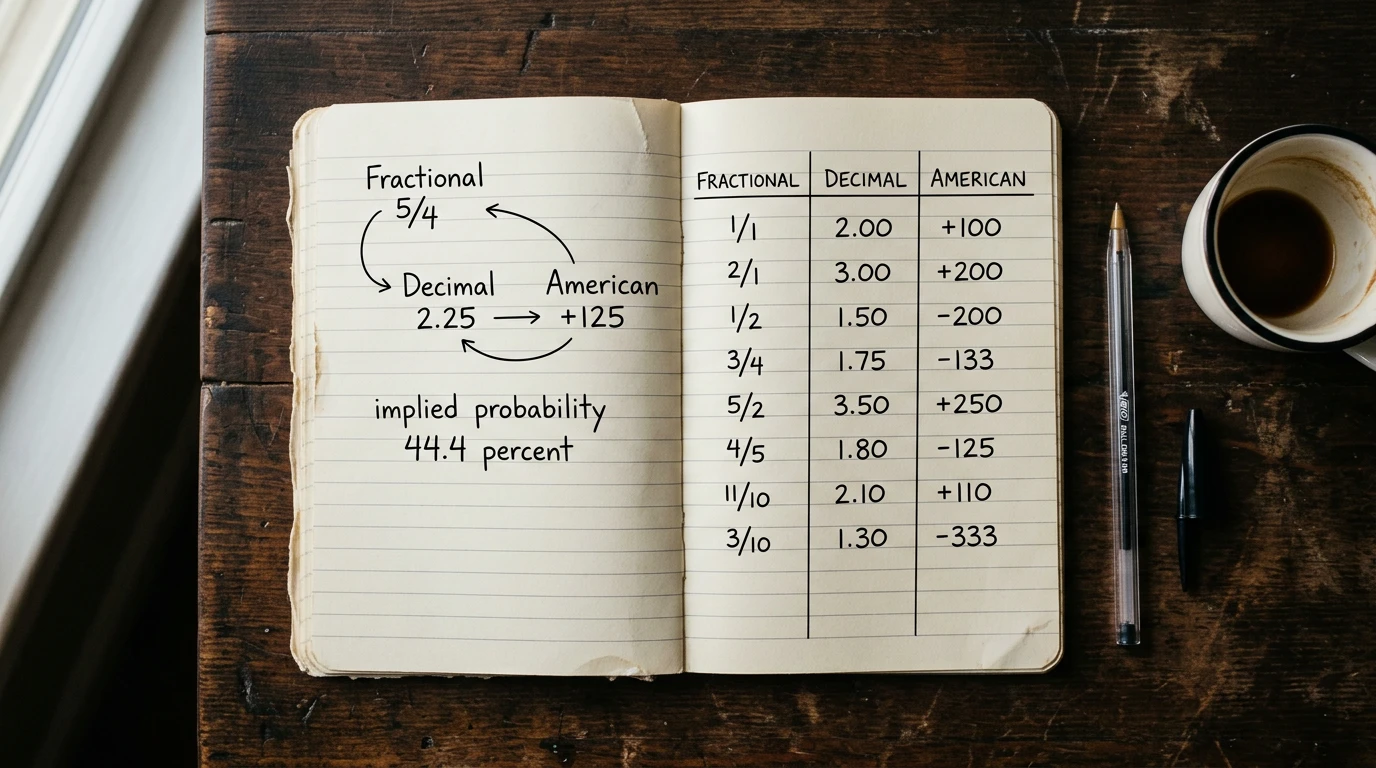
Those three prices are identical. A £10 stake at 5/4 returns £22.50, that is the £10 stake plus £12.50 profit. A £10 stake at decimal 2.25 returns £22.50 the same way. A $10 stake at +125 returns $22.50 in the same proportion. The arithmetic looks different. The implied probability is the same: roughly 44.4 per cent. Once you internalise that any odds format is just a different language for probability, the rest is mechanical.
American odds split at +100 / -100, often called even money or pick. Positive numbers like +135 tell you how much profit a $100 stake returns. Negative numbers like -180 tell you how much you need to stake to win $100 profit. On an NBA card, you will almost always see the favourite on the moneyline at a negative American figure such as Boston Celtics -210, and the underdog at a positive one such as Atlanta Hawks +175. Point spreads and totals are typically priced at -110 on both sides, which gives the bookmaker their vig.
Vig — short for vigorish; the margin a sportsbook builds into both sides of a market by pricing each below true odds. At -110 on both sides of a spread, the vig is roughly 4.5 per cent of the combined book.
Hold — the percentage of total handle a sportsbook keeps as gross gambling yield once all bets settle. American books have moved from a 6.7 per cent hold in 2018 to over 9 per cent in 2024-25, with parlay-heavy menus pushing the average up.
Hold percentage is the single most important number you can extract from any odds quote. The lower a book's hold, the more value flows back to the punter over a long run. UK operators tend to run leaner holds on football because the competition is brutal; on NBA they have been protected by lower domestic familiarity and now sit roughly at US levels. That gap is what makes line-shopping worthwhile. If two UKGC-licensed books are pricing the same Celtics moneyline at 1.83 and 1.91, the second one is a 4.4 per cent better deal on the same outcome.
I tell every new punter to set a single odds format inside their account preferences and force themselves to convert in their head until the conversion is automatic. Decimal is the easiest to do mental maths with. Fractional is the most British. American is the lingua franca of NBA analysis. You need all three, but you should pick one as your default. How implied probability works in practice walks through the conversion maths and the value-finding routines I use on a typical Saturday slate.
Player props are powerful, and the league knows it
In October 2025 a federal indictment came down on Terry Rozier of the Miami Heat and Chauncey Billups, then the head coach of the Portland Trail Blazers, alleging an insider sports-betting conspiracy. The Eastern District of New York announcement landed on a quiet Saturday morning and detonated every prop-betting menu in the world. I had been writing about prop integrity since the Jontay Porter lifetime ban in April 2024, but Rozier was a different animal. He was a starter. He was on a $26.6 million salary, roughly 17 per cent of Miami's 2025-26 cap. And the alleged scheme used confidential information about NBA athletes and teams to move prop lines.
Player props are markets on what an individual player will do in a single game: points, rebounds, assists, threes, steals, double-doubles. They are popular because they reward fan knowledge. They are dangerous because, unlike moneyline or spread bets, they can be moved by a single player's choices over a short window. A starter resting four extra minutes can flip a points line. A bench player skipping a fourth-quarter run can flip an under.
Why some props vanish mid-season
Since October 2024, US sportsbook partners of the NBA have agreed not to offer "under" prop bets on players signed to two-way or ten-day contracts. UK-licensed operators have largely fallen into line, and after the Rozier indictment most pulled additional menus around bench players altogether. If a prop you used to bet is no longer on the board, this is almost always why.
The league's reaction has been blunt. Commissioner Adam Silver gave an NBA on Prime interview on 24 October 2025 in which he said: "My initial reaction was I was deeply disturbed. There's nothing more important to the league and its fans than the integrity of the competition, so I had a pit in my stomach. It was very upsetting." I have watched Silver handle a lot of crises across his tenure. That one was different in tone, and the policy moves underneath it have been faster than usual.
The mechanical reason two-way and ten-day players are flagged is straightforward. A two-way contract pays a player a fraction of a guaranteed deal and lets the team move them between the NBA roster and a G League affiliate. Their playing time is volatile, often hinging on travel and roster gaps. That volatility makes their stat lines easy to manipulate from the inside. Silver himself has framed it the same way in interviews this autumn: the league had asked partners to pull back on props for two-way players because it was too easy to manipulate something that seems small and inconsequential.
What this means for your card
If you are betting NBA props from the UK, three rules now apply. First, check whether the player is on a standard NBA contract before backing a prop line; if they are on a two-way or ten-day deal, expect tighter offerings and almost no "under" markets. Second, treat sudden line moves on starter props as a signal; UK books move with the US books on integrity flags. Third, accept that prop menus are less generous than they were in 2023 and the regulatory direction is one-way.
The wider issue is that the NBA was not at the table when US states legalised sports betting, as Silver has noted in public interviews. The same is mostly true of UK regulation, which was designed for football and horse racing and is now extending coverage to imported markets. The integrity-flag plumbing that triggers a prop pull at a British sportsbook still runs through US data feeds, US compliance teams and the league office in New York. The lag between a US indictment and a UK book reacting is now measured in hours rather than days.
Deeper dive into NBA player prop markets and integrity controls covers the specific rules, how to spot a restricted player and how the post-October 2025 environment changes your prop bankroll allocation.
Live betting on the NBA is unlike anything in football
NBA games sprint where Premier League football jogs. Two minutes of game clock can hold three lead changes, two timeouts, a coach's challenge and a momentum-killing intentional foul. Live odds on a UK sportsbook reprice every few seconds, and the market depth for a single Lakers-Celtics game in late March is often deeper than for a top-of-the-table English fixture. If you came over from football, you need to recalibrate the speed of every decision.
In-play — UK term for live betting; markets remain open and reprice during the match. UK online betting GGY hit £596 million in Q4 2024-25 alone, a chunk of which flows through in-play menus on basketball.
Quarter betting — markets settled at the end of a single 12-minute quarter rather than the full game. Quarter spreads and totals are settled on that quarter's score only and do not include overtime.
Cash out — early settlement offered by the bookmaker before the bet's natural resolution, at a price that reflects the book's current model of the outcome. Cash-out values typically embed an additional margin and are not a free option.
The reason live NBA betting works at scale on UK platforms is the same reason it works on the global stage. Seventy-eight per cent of all online sports bets worldwide are now placed on mobile devices, and the NBA happens to be the most mobile-native major sport on the planet. Globally consumed live NBA content during the 2025-26 regular season passed 1.3 billion hours, up 93 per cent year on year. That is a sport built for in-play menus.
Quarter betting is the entry drug for a lot of UK newcomers. A single twelve-minute quarter feels manageable, the variance is contained and the bookmaker repricing is fast enough that you can read pace mismatches in real time. The catch is that quarter markets settle on the quarter alone — overtime is never included — which trips up punters who assume the standard moneyline and spread rule, where overtime is included, carries over. It does not.
Cash out is the most over-used button on any UK platform. The bookmaker is offering you a price they have decided is profitable to them. Sometimes the price genuinely is worth taking — you have a 92 per cent winning ticket and they are giving you 88 per cent — but more often it bleeds expected value out of your edge. I have a rule: cash out only on tickets where the underlying conditions have changed, such as an injury, an ejection or a developing blowout, rather than on a generalised desire to lock in profit.
The thing that separates good in-play punters from bad ones is patience. Markets overreact to a 9-0 run inside the first quarter. They overreact to a hot shooting half. The discipline is to wait for those overreactions and to fade them with small flat stakes. In-play NBA betting strategies covers the specific run-fading patterns, quarter-by-quarter pace reads and the cash-out scenarios where I will actually take the early ticket.
The UK regulatory frame is tighter than you think
The first time a punter asked me what the statutory levy was, I realised most operators had quietly hidden the change from their customers. The Gambling Levy Regulations 2025 took effect on 6 April 2025 and imposed a mandatory contribution on every UK-licensed operator: 1.1 per cent of online GGY, 0.5 per cent for land-based casinos and betting, 0.2 per cent for adult gaming centres and bingo, and 0.1 per cent for society lotteries and external lottery managers. The first-year take was projected at around £120 million, all of it ring-fenced for research, prevention and treatment of gambling harms.
What the levy means at the till
The levy is not a tax on your wager. It is a charge on the operator's gross gambling yield, paid quarterly, set in regulation, and enforced by the Gambling Commission. Operators have absorbed some of it and repriced inventory to recover the rest. Sharper odds on football, slightly softer odds on niche markets like NBA props — that is the practical consequence in the first year.
Andrew Rhodes, chief executive of the UK Gambling Commission, framed the wider context at the Betting and Gaming Council AGM in February 2025: "Recent data published shows that total gross gambling yield (GGY) is at its highest ever level at £15.6bn. Participation in gambling has remained stable at 48%, just under half of the adult population in Great Britain." The headline figure has since been updated to £16.8 billion, but the underlying point holds. Almost half of British adults gamble in some form in any four-week window. That is the surface the regulator works on.
A parliamentary under-secretary in the Department for Culture, Media and Sport described the policy intent during the House of Lords Grand Committee debate on the levy regulations: "The levy represents a watershed moment: a significant uplift in the investment dedicated to this area; greater government oversight; and a renewed commitment to further understanding, tackling and treating gambling harms." That is the framing inside government. Operators do not love it. The Betting and Gaming Council has been outspoken about cumulative regulatory cost. But the levy is now permanent furniture in the market.
Stake limits worth knowing
From 9 April 2025, online slots stakes were capped at £5 per spin for players aged 25 and over, and from 21 May 2025 at £2 per spin for players aged 18 to 24. The limits apply to slots specifically, not to sports betting stakes, but the regulator's direction of travel — age-tiered protection — is clear and will reach betting products eventually. Affordability checks at higher stake levels are already standard practice across UKGC-licensed sportsbooks.
The other big regulatory pressure point is channelisation. The share of UK gambling running through regulated channels has slipped from 97 per cent in 2019 to 92 per cent in 2025, with the Betting and Gaming Council estimating £16.6 billion in unlicensed betting activity last year — roughly the same size as the regulated market and three times the 2019 level. Every NBA punter using a non-UKGC site is feeding that black market, even unintentionally. There is no consumer protection, no levy contribution, no deposit limit framework, no recourse if a withdrawal request gets quietly ignored.
UK regulatory framework for NBA bettors goes through the specific licence conditions, affordability check thresholds and the operator obligations that affect your day-to-day NBA betting in detail.
How I shortlist UK bookmakers for NBA betting
I refuse to write a "best of nba bookmakers uk" list and I will tell you why. Every ranking I have read in nine years is some flavour of affiliate placement, where the order is tied to which operator pays the highest commission or has the latest sign-up offer. None of it tracks what actually matters when you are settling an NBA ticket at three in the morning on a Sunday. The criteria that count are mostly invisible to the affiliate rankings.
The checklist I actually use before opening an account
- UKGC licence visible in the footer with a clickable link to the operator's record on the Gambling Commission's public register.
- Deposit limit controls available at account level — daily, weekly and monthly — with limit-reduction taking effect immediately and increases subject to a cooling-off period.
- Reality checks and session-time pop-ups enabled by default, not opt-in.
- NBA market depth: at minimum moneyline, spread, totals, futures and 50-plus player props per game during regular season.
- Odds display in your preferred format (fractional, decimal or American) and the ability to switch instantly.
- Cash-out availability flagged transparently in market labels, not buried.
- Self-exclusion access via GamStop integration, surfaced in account settings without needing to hunt for it.
That checklist is non-negotiable because each item maps to a regulatory requirement or a market-quality signal. The first three are licence-tied. The next two are product-quality. The last two are responsible-gambling infrastructure. If an operator misses any of those, the answer is no, regardless of what the latest promo is offering.
Line-shopping is the next layer. Once you have two or three UKGC-licensed accounts open, you should be checking the same NBA market across all of them before staking. If Operator A is offering 1.91 on a Lakers spread and Operator B is offering 1.83, you are giving up a measurable share of your edge by not staking with A. Over a 200-bet season that gap turns into real money. Most British punters never bother. They stay loyal to one app because the UX is familiar and the deposit method is saved. That loyalty costs them.
Demographic data tells you who is the most exposed in this picture. The Gambling Survey for Great Britain shows roughly 48 per cent of British adults gamble in any four-week window. The gender skew on sports betting specifically is dramatic — 16 per cent of men against 4 per cent of women in April to July 2025 — and the operator marketing is calibrated accordingly. If you are a 35-year-old man who watches Prime Video, you are the precise centre of the target audience, and you should assume every nudge inside the app has been A/B tested against tens of thousands of people just like you.
The operator's job is to extract margin. Your job is to know how the extraction works. The checklist above is how I keep the relationship honest.
Discipline is the only edge most punters can keep
The single most useful thing I have learned in nine years writing about this market is that how much you bet matters more than what you bet on. Picks are easy to find. Discipline is rare. The reason most NBA punters lose money in a season is not because their selections are bad. It is because their stake sizing is undisciplined.
Unit sizing in practice
Step one — define your bankroll. This is money you can lose without affecting rent, food or bills. A typical recreational bankroll might be £500 for a full NBA regular season.
Step two — set a unit at 1 to 2 per cent of bankroll. On £500, that is £5 to £10 per bet.
Step three — apply the unit flat. A one-unit bet at decimal 1.91 returns £4.55 profit on a £5 stake. A two-unit confidence play stakes £10 on the same line for £9.10 profit.
Step four — recalculate your unit every month based on the new bankroll figure. If you have lost down to £400, your unit becomes £4 to £8. If you have grown to £600, it becomes £6 to £12. You compound up. You de-risk down.

That is flat-staking with a periodic resize. It is the boring strategy, and it is the one that actually keeps recreational punters in the game past the All-Star break. The 2024 Gambling Survey for Great Britain put problem-gambling prevalence — a PGSI score of 8 or higher — at 2.7 per cent of British adults. The headline number masks distribution. Among 18 to 24-year-olds, 21.9 per cent are at some risk level, with 5.3 per cent in the upper range. Younger punters using NBA products are the single most exposed group on a UK platform, and the discipline framework matters most to them.
Do
- Set deposit limits before you place a single bet, not after a losing run.
- Keep a written log of every NBA ticket, including stake, odds and rationale.
- Track closing line value to see whether you are beating the line over a long sample.
- Take 24 hours off after any session where you increased stakes to chase a loss.
Don't
- Chase a losing day by doubling stakes on the late tip-offs.
- Cash out reflexively on a green ticket because variance feels uncomfortable.
- Stack more than three selections in a bet builder for serious money.
- Bet on a game you are emotionally invested in, whether that is your team or your fantasy player.
I keep all of that in a single spreadsheet. So does every serious recreational punter I know. The point of the sheet is not to count winnings. The point is to make every decision visible to your future self. The bookmaker has every datapoint about you. You should have at least the same about yourself.
NBA betting questions UK punters keep asking me
Is NBA betting legal in the UK?
Yes, provided the operator holds a Gambling Commission licence. Every UKGC-licensed sportsbook that offers basketball markets can legally take NBA bets from UK residents aged 18 or over. The licence is verified through the Commission's public register, and the licence number is always shown in the operator's footer. Sites operating outside UKGC oversight, even if they advertise in English and accept GBP, are unregulated for UK customers and offer no consumer protection.
What are the main NBA betting markets available at UK bookmakers?
The five core markets are moneyline (match winner), point spread (handicap), totals (over/under combined points), player props (individual stat lines) and futures (long-term outcomes such as Championship Winner and MVP). All UKGC-licensed sportsbooks with NBA coverage carry at least these five families, plus bet builders for single-game accumulators and a deep in-play menu. Quarter and half markets sit inside the live menu and settle on the relevant period alone, without overtime.
How do American odds compare to fractional and decimal odds for NBA games?
All three formats express identical underlying probabilities. Fractional 5/4 equals decimal 2.25 equals American +125, which is roughly a 44.4 per cent implied probability. Positive American numbers show profit on a 100-unit stake; negative numbers show the stake required to win 100 units. UK operators let you switch the display format in account settings, and serious punters learn to convert in their head because US-based NBA analysis quotes prices in American format.
Why do bookmakers sometimes pull NBA bets on individual players?
The most common reason is an integrity flag. Since October 2024, NBA partners have not offered "under" prop bets on players on two-way or ten-day contracts. After the federal indictments of Terry Rozier and Chauncey Billups in October 2025, UK books extended restrictions across additional bench players and tightened limits on starter props during developing investigations. Lines may also be pulled briefly during injury news or roster-availability decisions and then reopened at a different price.
Is overtime included in NBA moneyline and spread bets?
Yes for moneyline, point spread and game totals: overtime points and the final overtime result are included in settlement. No for quarter markets, half markets and any period-specific prop: those settle on the relevant period only and overtime points do not count. The distinction trips up newcomers who assume the moneyline rule carries over to every market on the card. It does not, and operators publish the rule in their settlement terms.
How big is the UK gambling market and where does basketball fit within it?
UK gambling gross gambling yield reached £16.8 billion for the year ending March 2025. Remote betting on real events drove £596 million in a single quarter (Q4 2024-25). Football and horse racing together account for the bulk of remote-betting handle, leaving basketball inside the residual £2.4 billion that splits among all other sports. Within that residual basketball is the fastest-growing sub-segment, helped by Prime Video's NBA viewership rising 444 per cent year on year in 2025-26.
What is the statutory levy and how does it relate to NBA bettors?
The statutory levy is a mandatory contribution introduced on 6 April 2025 that requires UK-licensed gambling operators to pay a percentage of their gross gambling yield into a fund for gambling-harm research, prevention and treatment. Online operators pay 1.1 per cent, land-based betting and casinos 0.5 per cent, AGCs and bingo 0.2 per cent, society lotteries 0.1 per cent. The first-year take was projected around £120 million. For NBA bettors, the practical effect is slightly tighter operator margins, which translate to occasionally softer odds on niche markets including some prop lines.
Where I would start if I were new to NBA betting today
If a friend told me they wanted to try nba sport betting for the first time tomorrow morning, I would tell them to do three things in a specific order. Open one UKGC-licensed account. Set a deposit limit lower than feels necessary. Stick to moneyline and totals for the first month. Nothing more.
Then I would tell them to read every game settlement carefully. Andrew Rhodes at the UKGC framed it precisely when the GSGB 2024 release went out: the survey is, in his words, "a key building block of the evidence base which helps government, industry and other partners understand both gambling behaviour and potential consequences from gambling." The data exists because the consequences are real. Your job is not to ignore that data. Your job is to use it on yourself.
The British NBA market in 2026 is bigger, faster and better-regulated than at any point in the last decade. Prime Video has reset the audience scale, the statutory levy has reset the operator economics, and the Rozier indictment has reset the integrity conversation. The punter who reads the picture clearly — UKGC licence first, discipline second, picks third — is the punter who is still standing in April when the playoffs tip off. Everyone else has already deposited again.
Nine seasons of writing about this market have taught me that the punters who survive are not the ones with the best information edge. They are the ones with the most stable relationship with their own money. Every other variable — odds format, market depth, prop integrity, statutory levy, live in-play discipline — circles back to that single fact. Build the discipline first. The picks come later, and they come naturally.