NBA Cash Out and Early Payout
The first time I cashed out an NBA bet I felt clever for an hour, then watched the bet I'd cashed go on to win and felt foolish for two…

Bet on the NBA Cup with the best UK bookmakers. Compare group-stage markets, analyze mid-season trends, and claim lucrative knockout round promotions.
 Available in US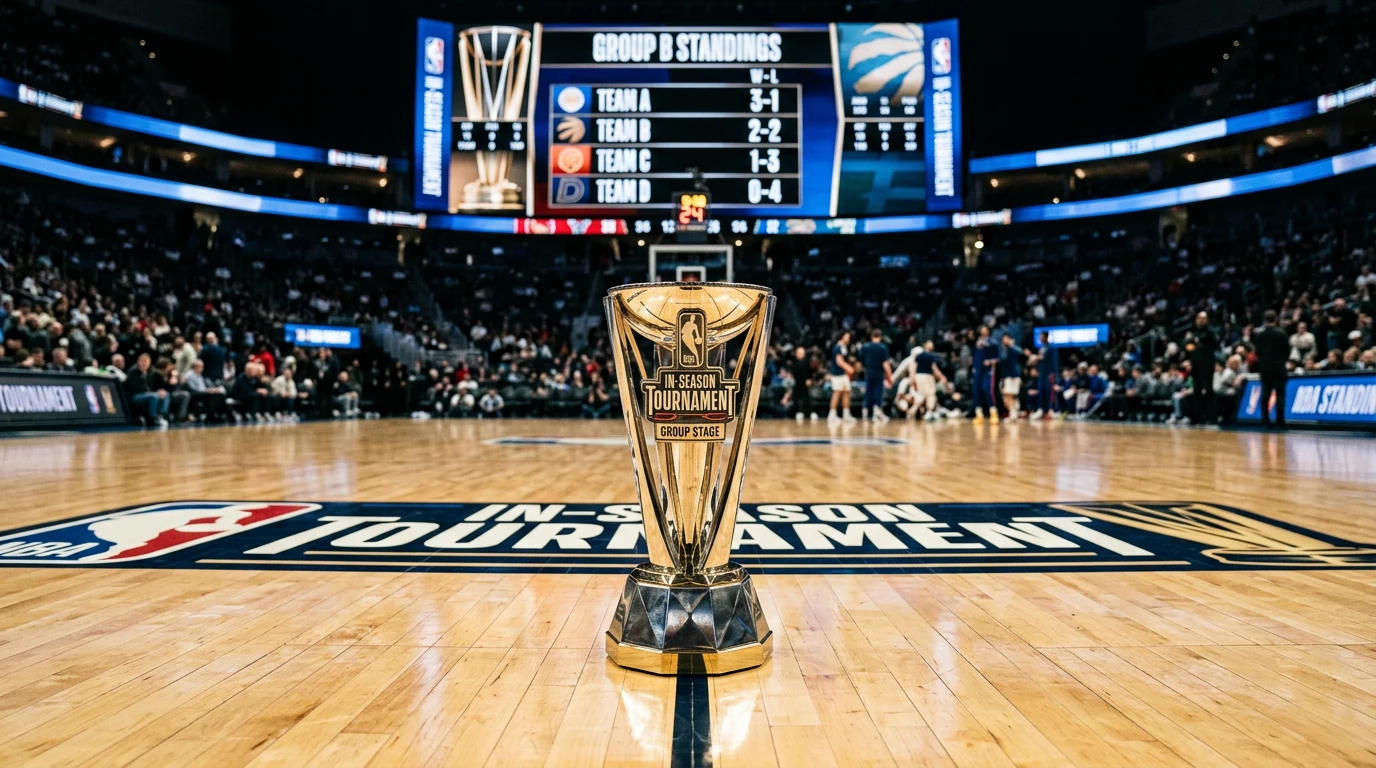
Table of Contents
NBA Cup betting is the closest thing American basketball has to a domestic cup competition, and that framing matters more than punters initially realise. The format borrows from football’s group-stage-into-knockout structure, drops it into the middle of a long regular season, and asks bookmakers to price a tournament where roster decisions, motivation levels and game-by-game tactics shift in ways that the standard league schedule never demands. For a UK punter trained on football cup competitions, the rhythm is intuitive once you know which markets reward attention and which ones are noise.
The audience numbers from the most recent edition tell their own story. The NBA Cup final in December 2025 averaged 3.07 million US viewers, peaking higher across the broadcast window, and the wider 2025-26 season carried 1.3 billion live viewing hours globally – up 93% year on year. That viewership lift is the kind of context that pulls UK bookmakers into pricing the Cup more aggressively than they would a comparable mid-November regular-season slate, and it is why the Cup markets are now a meaningful chunk of the in-season NBA calendar for serious punters.
The structure is worth understanding before you place a single bet. The Cup runs through November and into mid-December, divided into a group stage and a knockout round. Group stage games are pulled from the existing regular-season schedule – each team plays four group games on designated “tournament nights” against teams within its own conference group, and the results of those games still count towards both the standard league standings and the Cup standings. That dual-purpose scheduling is unusual and it creates pricing situations that a routine regular-season game would not.
From each group, the team with the best record advances, plus two wild cards from each conference based on the next-best Cup records. The knockout rounds are single-elimination, played at the home court of the higher seed up to the semi-finals, with the championship round staged at a neutral venue – currently Las Vegas. Games in the knockout rounds before the final do not count towards the regular-season standings, which is a quirk that meaningfully affects how coaches manage minutes and rotations.
For nba cup outright markets, that quirk matters because it changes incentive structures at the sharp end of the bracket. A team that has been carrying a heavy regular-season rotation load suddenly faces a single-elimination game that does not boost its playoff seeding. Coaches respond by managing star players carefully in some matchups and emptying the bench in others, and the books that price these games well are the ones that account for the rotation patterns rather than just the underlying team quality.
Group-stage NBA Cup pricing is where most punters get themselves in trouble. The temptation is to treat the games as elevated regular-season fixtures and bet them accordingly, but the in-season tournament odds reflect things a routine November game does not – a tie-breaker on point differential that incentivises late-game scoring runs, a soft motivational layer that favours teams already eliminated from group advancement chasing nothing, and a sharper line on referee patterns because the Cup uses dedicated officiating crews.
The headline group-stage market is the standard spread and total, both of which run a touch tighter than a comparable regular-season fixture between the same two teams. That tightness comes from the increased volume the Cup attracts and from the slight efficiency boost that comes with the additional contextual data – coaches preview Cup games more thoroughly in their public comments, beat writers cover them with more attention, and the result is a market that prices new information faster than a routine Wednesday-night fixture.
The interesting market for sharp UK punters is the point-differential tie-breaker side bet, which some UK books offer in various formats. Because tie-breakers run on cumulative point differential within the group, the final group-stage game for a team that has clinched advancement often runs at full intensity for reasons that do not show up in the standings. That creates pricing opportunities on totals and team totals when the public assumes a meaningless game and the participating team is actually chasing seeding through margin. The reverse is also true – a team with no path to advance can quietly soft-pedal a final group game even when the season standings suggest otherwise.
I have spent more time than I would care to admit watching Cup quarter-final games where the favourite priced like a clear winner and then dropped a double-digit decision. The single-elimination format does something to NBA basketball that the seven-game playoff series never does – it puts variance front and centre, and good teams lose games they would win four times out of seven on any given night. Once you accept that, knockout-round NBA betting becomes a different exercise than playoff betting.
The pricing reflects that variance. Spreads in the quarter-finals run slightly tighter than the underlying team-quality differential would suggest, because books are pricing in the possibility that the higher seed underperforms. Totals follow a similar pattern, with knockout-game totals trending a fraction higher than the season averages of the two participating teams, on the logic that single-elimination basketball pushes pace up. Whether or not that logic holds in any given year, it is baked into the opening lines and it sets the frame for everything that follows. To see how Cup play differs from playoff seven-game series in pricing terms, the contrast is essentially about the absence of the second-game adjustment mechanism – Cup knockouts have no series price to anchor.
The final, played at a neutral venue, has its own pricing rhythm. Las Vegas is not a true neutral court in any meaningful sense for the two teams contesting it, but it is treated as one for market purposes, which means the books strip out home-court advantage and price the game on pure team quality plus matchup factors. The 2025 final’s broadcast performance suggests UK in-play volume on the Cup final is now substantial enough that the in-play market behaves like a major-event game rather than a single regular-season fixture.
Three trends have emerged across the Cup’s recent editions that punters should keep in mind for future tournaments. First, group-stage point differential is the most consistent leading indicator of knockout-round performance – teams that posted strong differentials in the group stage have substantially outperformed their seeding in the knockouts. Second, rest days between the final group game and the quarter-finals matter more than the standings suggest, because the schedule compression around Cup nights leaves some teams playing back-to-backs that others avoid. Third, neutral-site final pricing has consistently overrated the higher-seed favourite, with underdog returns on the championship game running above neutral expectation across the format’s editions.
The combined effect on a working punter is that the Cup is worth the additional attention. It is a market that has not yet been ground down to perfect efficiency, partly because it remains a relatively new product and partly because casual punters still default to treating it as routine regular-season basketball. That gap is closing – the 1.3 billion hours of global viewing this past season means money is now flowing through these markets at meaningful scale – but a punter who reads the Cup format properly still has a structural edge over one who ignores it.
The other side of the trend story is what the Cup does to player props and same-game parlays. With dedicated officiating crews, neutral final venues and rotation patterns that diverge from the regular-season norm, prop pricing on Cup games has consistently shown more dispersion than equivalent regular-season props between the same teams. Same-game parlay correlations also behave slightly differently – three-point dependency on pace runs stronger in knockout games where pace tends to rise, which marginally tilts certain build combinations in the punter’s favour and against the bookmaker’s correlation model.
The first time I cashed out an NBA bet I felt clever for an hour, then watched the bet I'd cashed go on to win and felt foolish for two…
I spent my first NBA betting season ignoring the vig because I…
NBA finals betting is where the postseason settles into its highest-stakes form.…
The first time I tried full Kelly on NBA bets, I went…
