NBA Playoffs Betting Guide for UK Bettors
NBA playoffs betting is what hooked me on basketball markets in the first place. After a long regular season where 1,230 games blur into one another, the playoffs strip everything…

Place winning NBA moneyline bets at premier UK sportsbooks. Compare odds for favourites and underdogs, and secure exclusive 2026 welcome promotions.
 Available in US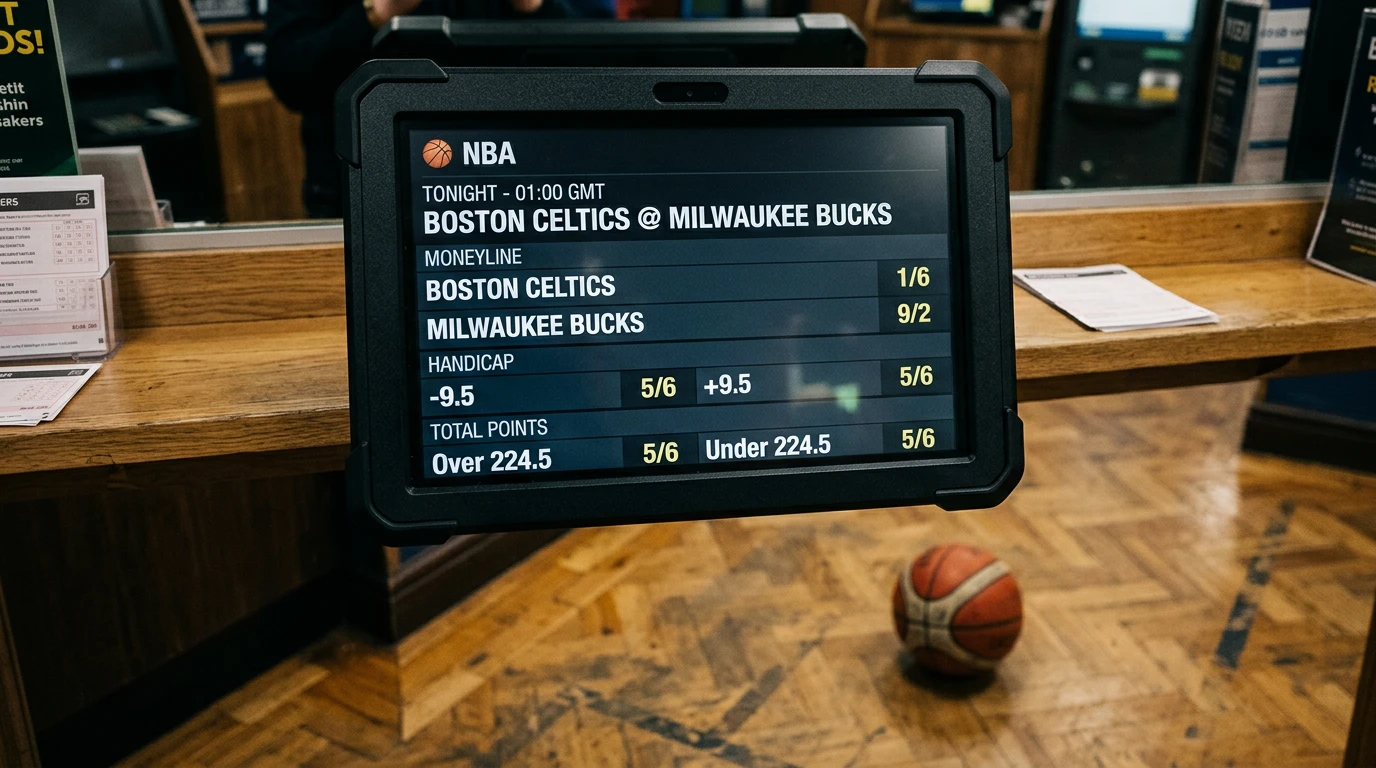
Table of Contents
The first NBA bet I ever placed in the UK was a moneyline on a Tuesday-night Lakers game, and I almost talked myself out of it because the price looked weirdly long. That confusion – looking at -260 from one bookmaker and 1/3 from another and not being sure what either really meant – is where most British punters land when they cross over from football. Nine years on, I still think the NBA moneyline is the cleanest entry point into basketball betting. No handicap to track, no period to wait out, no correlation maths. You back a side to win the game. That’s it.
What makes it tricky for a UK audience is the dialect. NBA moneyline betting borrows its language from US sportsbooks, but you’re booking your stake through a UKGC-licensed operator that may show prices in fractional, decimal or American notation depending on the page you land on. In the US, basketball – the NBA plus college – already accounts for roughly 28% of national sports betting handle, so the moneyline ecosystem there is dense and mature. In the UK, basketball still fights for room inside the £2.4 billion remote betting pool that football and horse racing dominate, which has a practical consequence: prices can be sharper at some books than others, and that gap is your opportunity.
Here is the thing nobody told me when I started – a moneyline is just a single number that tells you the bookmaker’s view of the match-winner, dressed up in three different costumes. American notation, fractional notation, decimal notation. Same probability underneath.
Take a typical mid-season fixture. The Celtics open at home against the Wizards. A UK bookmaker might show Boston at 1/6, which is decimal 1.17, which is American -600. Stake £10 to win £1.67 in profit, total return £11.67. The Wizards on the other side might be 9/2, decimal 5.50, American +450. Same £10 stake returns £55 if the underdog pulls it off.
That’s the mechanical bit. The interesting bit is that NBA moneylines run much longer than football moneylines because NBA games have no draw – they go to overtime until somebody wins. So there’s no third outcome to siphon off probability, which is why you’ll see prices like 1/10 on heavy favourites that simply don’t exist in Premier League match-winner markets. And yes, overtime counts. If the Celtics win in OT, the moneyline still pays.
One UK quirk: most bookmakers will display the moneyline as “Match Result” or “Match Winner” alongside the spread and totals, and the unit options usually include regulation only (no OT) as a separate market. Read the bet slip carefully – they look identical until you scroll.
I once placed a £25 ticket on the Pistons at +850 against the Warriors during the Steph Curry era and lost it inside the first quarter. The point is not that long-shots are bad bets – it’s that the prices reflect an honest read of the talent gap, and you need a real reason to disagree before you click.
The NBA produces big favourites for a reason. There are 82 regular-season games, the league is built around five-on-five with high-volume scoring, and individual talent compounds across a long match. When the best team plays the worst team, the favourite wins more often than in any other major sport. UK punters who arrive from Premier League football, where a Manchester City home match might price at 1/3, are sometimes shocked to find an NBA favourite at 1/10 on a Wednesday – but the underlying win probability genuinely supports it.
The implied probability tells the story. Decimal 1.10 means the bookmaker thinks the favourite wins around 91% of the time before any margin. Decimal 5.50 on the underdog says 18% before margin. Add the two together and you’ll find they total slightly above 100% – that overshoot is the bookmaker’s vig. On a clean two-way moneyline you’d expect a hold of around 3% to 5% with UK operators, lower on marquee games where the lines are sharpest.
Where new punters trip up is on chasing dogs without a thesis. A short favourite at 1/4 is not “boring money” – it’s a price you should only take if your read on the game disagrees with the implied 80%. If you think the favourite is actually a 75% shot, you’re laying value, not collecting it. Underdog bias works the other way: if a +400 dog looks juicy, the question is whether your implied probability is closer to 25% than the bookmaker’s 20%.
Here’s a small confession – for my first two seasons of NBA betting, I treated home court as a flat 3-point cushion and rested players as a flat coin-flip. I was wrong on both counts.
Home advantage in the NBA used to be worth roughly 3 points on the spread, which translates into noticeable moneyline movement. In recent seasons it’s compressed closer to 2 points because of standardised travel, sleep science across teams, and load-management practices that flatten out the road grind. That compression matters when you’re shopping prices: a road favourite of -180 on Monday and -160 on Tuesday for the same fixture often reflects different bookmakers using different home-court constants in their models.
Rest is the second variable that moves moneylines more than UK punters expect. The NBA’s back-to-back schedule – two games in two nights, sometimes in two different time zones – produces measurable performance drops in the second leg, especially on defence. When a top team plays a back-to-back on the road against a rested opponent, the moneyline can move 30 to 50 cents in American odds even if neither roster has changed. That movement is not a tip – it’s already priced. But if a starter gets ruled out at the morning shoot-around and you’re watching the market in UK afternoon hours, you may catch a moment before the new price settles. Those windows close fast.
Travel is the quieter cousin of rest. East-to-west trips are tougher than west-to-east because circadian rhythms favour the body’s natural lengthening of the day. A Boston team flying to Sacramento for a 10:30 PM tip in UK time, on the back end of a Western swing, is probably overpriced by the public, who anchor to season-long ratings without adjusting for the schedule. If you want to dig into how the line absorbs these adjustments before it stops moving, the how point spreads adjust the moneyline piece walks through the conversion.
Let me show you how I’d actually evaluate a single ticket, because the abstract maths only sticks once you put numbers on it. Imagine a Thursday-night NBA game: Denver Nuggets at home against the Charlotte Hornets. Denver opens at 1/8 on a UK book, which is decimal 1.13. Charlotte is 13/2, decimal 7.50.
First, implied probability. Denver at 1.13 = 1 ÷ 1.13 = 88.5%. Charlotte at 7.50 = 1 ÷ 7.50 = 13.3%. Add them: 101.8%. The overround is 1.8% – a tight market for a lopsided fixture, which tells you this book has confidence in its number.
Second, what would a no-vig fair price look like? Divide each implied probability by the total: Denver fair = 88.5 ÷ 101.8 = 86.9%, Charlotte fair = 13.3 ÷ 101.8 = 13.1%. So the bookmaker’s honest read of the game is Denver as an 86.9% favourite.
Third, your edge test. If you think Denver actually wins 90% of the time – perhaps because Charlotte is on the second night of a back-to-back, two starters out, post-trade-deadline chaos – then taking 1.13 has positive expectation. If you think Denver wins 85%, you’re laying value to the book and you should skip the bet. The £10 stake on Denver at 1.13 returns £1.30 in profit. Across 100 bets at a genuine 90% win rate, you’d expect £90 × 1.30 – losses on the 10 misses – leaving roughly £17 net. Across the same 100 bets at an 85% true rate, you finish underwater. The margin between profit and loss on heavy favourites is razor-thin.
That’s why most disciplined UK NBA bettors I know don’t farm out heavy chalk all season – the implied win rate has to come from somewhere, and unless you’ve got a genuine model edge, the maths punishes you on the inevitable upset.
NBA playoffs betting is what hooked me on basketball markets in the first place. After a long regular season where 1,230 games blur into one another, the playoffs strip everything…
I've been burying small futures positions in NBA championship markets for nearly…
NBA line movement is the single most underrated information source for the…
NBA vs NFL betting is the comparison every UK us sports betting…
