Kelly Criterion Applied to NBA Bets
The first time I tried full Kelly on NBA bets, I went bust on a £500 starting bankroll inside six weeks. The maths was correct. My estimate of my edge…

Understand how two-way contracts affect NBA prop availability. Compare UK bookmakers offering the widest player markets, and secure your sign-up bonus.
 Available in US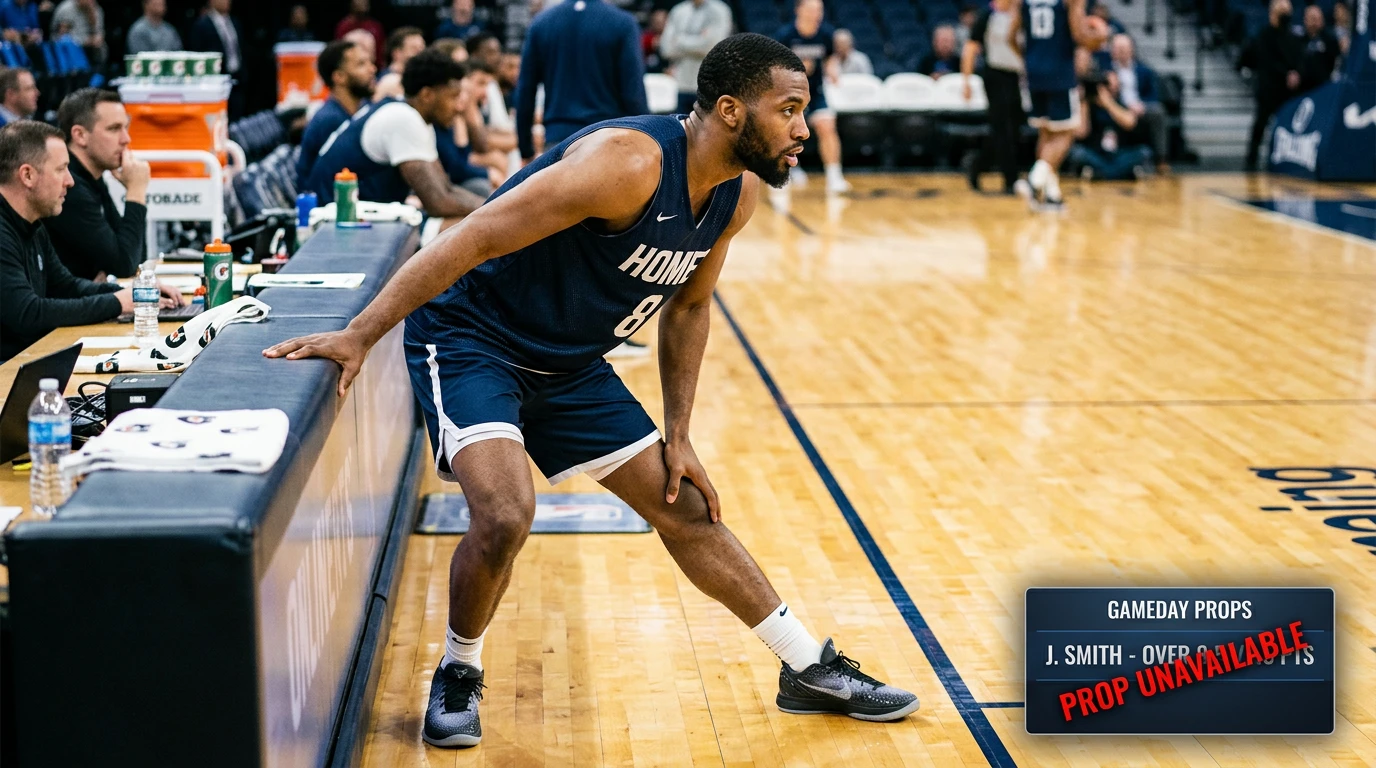
Table of Contents
A two-way contract NBA betting scenario looks innocuous on a UK punter’s screen – a player on the team, a points line, a quick pick. The reason that line is sometimes mysteriously unavailable, or restricted to overs only, has nothing to do with the player’s talent and everything to do with how the NBA, the players’ union and US sportsbook partners restructured prop markets after the 2024 Jontay Porter case and the October 2025 federal indictments against Terry Rozier and Chauncey Billups. The restrictions are quiet, they sit underneath the headline markets, and they affect UK books indirectly when their parent operators or their data feeds are tied to US partners.
The numbers behind the change are stark. From October 2024, official US NBA sportsbook partners stopped offering “under” props on two-way and 10-day contract players following the league’s request – a quiet structural shift that pre-dated the bigger Rozier news. Then the October 2025 federal charges against a sitting NBA head coach and a starting guard forced the league and its partners into a much more public second round of review. Understanding the contracts at the bottom of all this is the first step in understanding why some prop markets you might expect to see are simply not on offer.
A two-way contract is the NBA’s structural compromise for players who are too good for the G League but not quite ready for a permanent NBA roster spot. Each NBA team carries a small number of two-way contract slots, and players on those contracts split their time between the NBA roster and the team’s G League affiliate. The pay scale is a fraction of the NBA minimum salary, and the player’s eligibility for postseason rosters is restricted under collective bargaining rules.
The key for prop markets is what a two-way salary looks like next to a standard NBA contract. A two-way player earns somewhere in the region of $600,000 on a current schedule, against an NBA league minimum that sits comfortably above $1 million and a maximum salary that can clear $50 million. The financial gap between the two-way player and the people around him in the dressing room is the structural problem from a betting-integrity perspective – a player earning a fraction of the league minimum has measurably less to lose by manipulating a marginal prop than a player earning eight figures.
The G League rotation also matters. A two-way player on an NBA roster on a given night might be a healthy scratch, might play three minutes of garbage time, or might catch a starting role because three players above him on the depth chart are injured. The variance in his minutes is enormous and unpredictable from one night to the next, which makes the pricing of an “under” prop on his statistical line uniquely vulnerable to manipulation. A player who knows in advance he is going to be benched after five minutes carries information the market does not have.
Ten-day contract betting carries the same integrity exposure as two-way contracts, dialled up a notch. A 10-day contract is exactly what it sounds like – a short-term agreement that gives an NBA team flexibility to fill a roster spot for ten calendar days, often because of injuries or schedule compression. After the ten days, the player is either released, signed to a longer contract, or rotated out for someone else on a similar deal.
From a betting standpoint, the salary structure of a 10-day contract is similar to the two-way pay scale – a small fraction of what a permanent roster player earns, with no contractual guarantee beyond the ten days themselves. The integrity risk is even sharper because the player’s incentive structure is short-term and explicit: do enough in ten days to earn a longer deal, then move on if that does not happen. A 10-day player who knows he is not being retained has even less long-term skin in the game than a two-way player working towards a permanent contract.
UK punters do not always realise that 10-day signings can appear in NBA prop menus the same way regular roster players do, particularly on smaller operators whose price feeds do not flag the contract status explicitly. The “under” restrictions that US-licensed sportsbooks have applied since October 2024 do not always propagate to UK books, which means a UK punter might see an “under” prop on a 10-day player that no US partner is willing to offer. That is not necessarily a value opportunity – it is, more often, a structural risk that the UK book has not yet caught up with.
The story behind the restrictions starts with the 2024 Jontay Porter case – a lifetime ban issued in April 2024 for a player who deliberately exited games early to cause “under” props on his statistical lines to cash. That case set the template: the manipulation was small, the financial reward to the player was modest in NBA terms, and the prop market involved was a routine UK-style points-rebounds-assists line on an unremarkable player. The league responded by working with its commercial partners to restructure the prop offering.
Adam Silver was explicit about the logic. In a Sports Illustrated interview last November, he explained: “We’ve asked some of our partners to pull back some of the prop bets. Especially when they’re on two-way players – guys who don’t have the same stake in the competition – where it’s too easy to manipulate something that seems small and inconsequential.” The wording is precise – the restriction is not because two-way players are dishonest but because their contractual position creates an asymmetric vulnerability that the league judged unacceptable to leave in the market.
The October 2025 federal charges against Terry Rozier and Chauncey Billups changed the urgency of the conversation. Rozier was a player on a contract that pays roughly $26.6 million annually – well within the regular NBA salary structure rather than the two-way bracket – and the alleged manipulation involved sharing information about his own minutes with bettors before deliberately exiting a March 2023 game. That a player on a substantial guaranteed contract was charged in connection with prop manipulation forced the league to reconsider whether the existing two-way restrictions went far enough. The wider question – whether broader prop categories should be restructured – is still working through the league office, the union and the US commercial partners. For the broader picture on that case and how UK markets adjusted in its aftermath, the context of the Rozier-Billups indictment is worth reading in detail.
For UK punters, the practical effect is that prop menus on UK-licensed bookmakers have become quietly narrower over the past eighteen months. Markets that were routine in 2023 – “under” on a two-way player’s points, novelty props on individual play-by-play moments, granular cumulative stats on bench players – have either been removed from menus or pulled to higher minimum-stake tiers that limit their accessibility. The structural reasons behind those changes sit upstream from the UK market, but the consequences land squarely on the UK punter’s screen.
For the average UK NBA punter, the visible result of all this restructuring is a smaller and more conservative prop menu than the one that existed two seasons ago. The “under” markets on lower-tier players are the most obviously affected – many UK bookmakers no longer post them on two-way or 10-day contract players at all, and the ones that do tend to offer them only at reduced stake limits with explicit voiding clauses for late lineup changes.
Same-game parlay menus have also tightened around two-way and 10-day players. The construction rules on most major UK SGP products now exclude restricted contract players from certain leg combinations, particularly any combination that includes an “under” component or a cumulative team-total leg. The exclusions are not always flagged prominently in the UK interface – punters typically find out a leg is unavailable only when they try to build the parlay – but they are a consistent feature of the post-2024 product landscape.
The structural lesson for UK punters is that prop restrictions on lower-tier players are not a temporary measure that will roll back. The league has invested too much in the integrity narrative to reverse course, and the regulatory pressure both in the US and the UK runs in the same direction. Expect prop menus to continue narrowing on the players whose contract structure creates the most integrity exposure, and expect the same-game parlay combinations available to UK punters to keep tracking that narrowing.
The first time I tried full Kelly on NBA bets, I went bust on a £500 starting bankroll inside six weeks. The maths was correct. My estimate of my edge…
NBA vs NFL betting is the comparison every UK us sports betting…
The single best decision I made as a UK NBA bettor was…
Knowing how to watch NBA UK coverage properly is the unglamorous half…
