NBA Acca Edge and Acca Insurance
NBA acca insurance and acca edge promotions are the part of the UK bookmaker product offering that look most generous on the homepage and most fiddly in the small print.…

Ensure safe NBA betting by verifying UKGC-licensed bookmakers. Compare regulated platforms, secure guaranteed payouts, and claim safe welcome bonuses.
 Available in US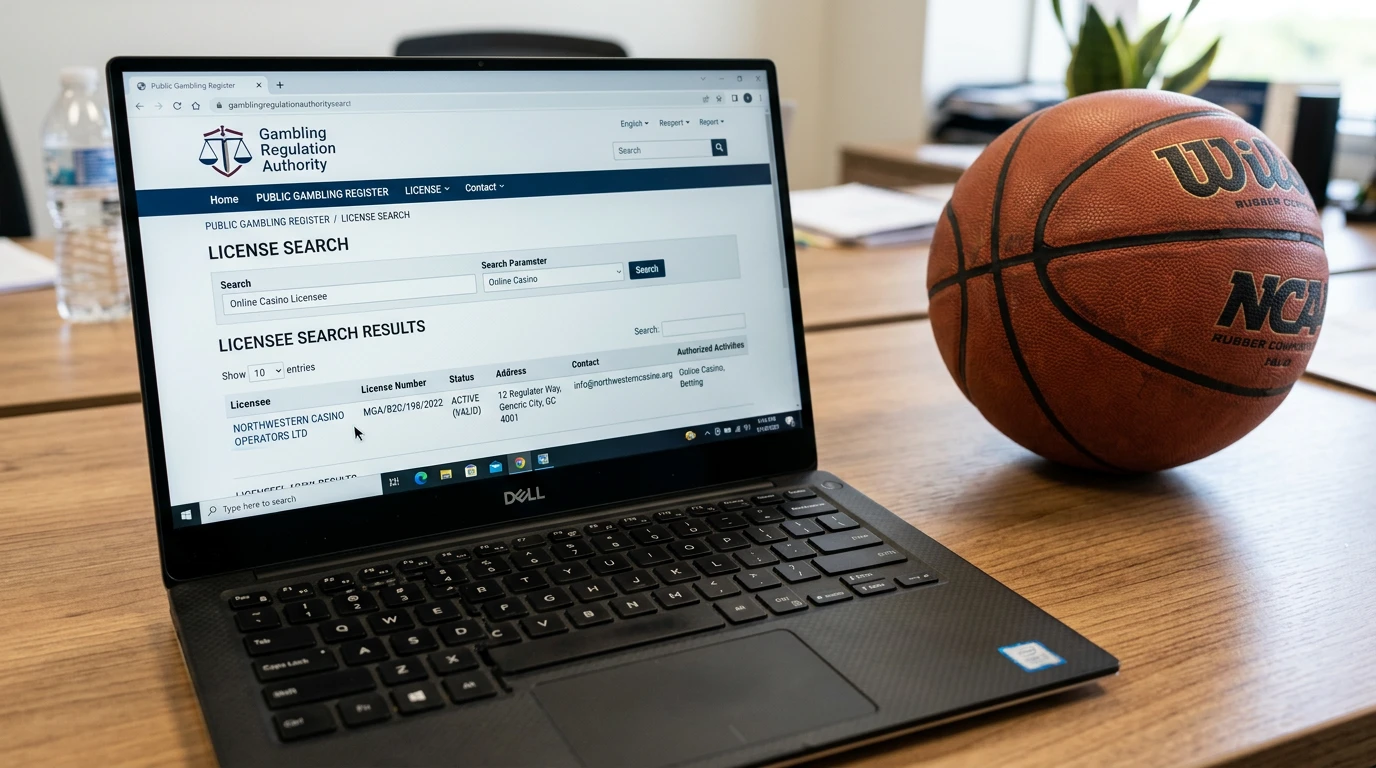
Table of Contents
Verifying a UKGC licensed NBA bookmaker is one of those tasks that takes about ninety seconds and saves a tremendous amount of grief. Most UK punters never bother – they assume that if a site looks professional and pays out a £20 win bet quickly, it must be legitimate. That assumption is wrong frequently enough that the UK Gambling Commission maintains a public register of every licensed operator specifically so that anyone can verify a site before depositing real money. The check is free, it takes seconds, and it is the single highest-leverage piece of due diligence available to a UK NBA punter.
The licensed market is large enough that nearly any reputable name you have heard of is on the register. The total UK gambling gross yield reached £16.8bn in the year ending March 2025, up 7.3% year on year, and the overwhelming majority of that turnover passed through operators carrying current UKGC licences. The risk lives at the edges – offshore sites with English-language interfaces, white-label operators trading under names that look familiar but are not licensed in the UK, and aggressive bonus offers that route punters to sites with no UK presence at all. This guide walks through the verification process and what to do when a site fails the check.
The UKGC issues several distinct licence types, and not all of them cover NBA betting. The categories that matter for a UK punter looking to place a basketball wager are the remote general betting standard licence and the remote general betting limited licence – the two licence variants that authorise online sportsbook activity targeting UK customers. Without one of those, a site is not lawfully entitled to take a bet from a UK resident, regardless of what its homepage claims.
Each licensed operator carries a public account number on the UKGC system, plus a separate operating licence number for the licence type. Those numbers are the keys to the verification process. A reputable bookmaker displays them prominently – usually in the footer of every page, often alongside a logo for GamStop and a link to a responsible gambling page. The absence of these elements is itself a meaningful signal, and it is worth scrolling to the footer of any site before you create an account.
For a UKGC register check that goes beyond the obvious, look at what the licence covers. Some operators carry remote betting licences but not remote casino licences, or vice versa – that is fine for an NBA-focused punter, but it does mean the site is restricted in what it can lawfully offer. A few operators carry multiple licences under related corporate names, with the customer-facing brand sitting under a parent entity. That structure is legitimate but it does mean you need to verify the actual licensed entity rather than just the brand name on the homepage, and the register makes that traceable in a couple of clicks.
The UKGC public register is the definitive source, and it is the only one I rely on. The register is searchable by operator name, by trading name, by account number and by domain name – four different ways of finding the same information, which is useful because the trading name on a site sometimes differs from the licensed corporate entity. You can verify gambling licence uk records this way for any sports site that solicits UK custom, and the register will return either a clean record or no result at all.
The search workflow I use looks like this. Start with the domain – the part of the URL between “www” and the country suffix. Search the register for that domain. If a record returns, check that the licence status is “active” and that the licence type covers remote general betting. Then cross-check the trading name on the bookmaker’s site against the trading names listed on the register entry – they should match exactly, and any discrepancy is worth pausing over. Finally, note the account number on the register and verify it against the number displayed in the bookmaker’s footer.
One detail that catches punters out: a site might be registered to a UK-licensed operator but operate a separate brand for a different territory. The brand you see and the licence you find might be associated with the same corporate parent, but if the specific trading name you are looking at does not appear on the licence, the site itself is not licensed for UK custom even if its parent company is. This is the most common way that recognisable-sounding sites turn out not to be UK-licensed in practice, and it is exactly the gap the register is designed to catch.
The register also shows the licence holder’s address, the trading names associated with it, and the date the licence was issued or last amended. None of these are make-or-break by themselves, but they paint a coherent picture of who you are actually dealing with. The channelisation of legal versus illegal play has slipped from 97% in 2019 to 92% in 2025, which means an increasing fraction of UK gambling activity is now flowing through unlicensed channels – making the register check measurably more important than it was five years ago.
Before you even reach the register, the site itself usually tells you most of what you need to know. The first thing I check is the footer. A UK-licensed bookmaker displays its UKGC account number, a GamStop link, the BeGambleAware logo, and an explicit statement of the legal entity that holds the licence. The absence of any of those four is a meaningful warning sign, and the absence of all four is essentially a positive identification of a site that should be avoided.
The next check is the payment options. UK-licensed operators are required to support specific consumer-protection mechanisms around deposits and withdrawals, and they routinely offer the major UK debit card providers, established e-wallets, and direct bank transfer. A site that offers only cryptocurrency, only obscure payment processors, or only methods that require routing through a third-party processor in another jurisdiction is almost certainly not UK-licensed, regardless of what its homepage claims.
The bonus terms are the third tell. UK-licensed operators have to comply with specific advertising rules around bonus offers – the headline figure must be matched by transparent wagering requirements, the “free bet” terminology has to align with how the bet actually settles, and the small print is required to be accessible from the offer page itself. An aggressive headline bonus with terms that are hard to find, or terms that include unusual rollover conditions, is a signal of an operator that does not face UKGC enforcement.
The fourth check is the customer service contact information. A UK-licensed bookmaker provides a UK telephone number, a working email address that returns a response in a reasonable timeframe, and a complaints procedure that explicitly references the Alternative Dispute Resolution scheme the operator is registered with. Sites that only offer a live chat function, that route phone calls overseas, or that have no documented complaints procedure are sites where consumer protection is at best optional.
The most important step if a site fails the register check is to not deposit money. That sounds obvious, but plenty of UK punters convince themselves that they will be careful, or that the bonus is worth the risk, or that they have heard of the brand from somewhere and it must be fine. Money deposited with an unlicensed operator is functionally outside the UK consumer protection framework – there is no Alternative Dispute Resolution path, no UKGC enforcement, and no realistic legal recourse when a withdrawal is delayed or refused.
If you have already deposited money before completing the verification, the priority is to withdraw the balance back to the source of funds. Document everything – screenshots of the account, transaction history, support ticket numbers – because you may need that evidence later. Treat any withdrawal delay as a serious warning sign and escalate it through whatever channels the site offers, while accepting that an unlicensed site’s complaints process may be limited in practice.
The UKGC accepts reports of unlicensed operators targeting UK customers, and the reporting channel exists specifically to give consumers a route to flag sites that should not be soliciting UK custom. Reports do feed into the regulator’s enforcement priorities, and the channelisation slippage from 97% to 92% over six years is the precise problem that consumer reports help the regulator address. For a fuller picture of what black-market NBA sites look like in practice, the concrete risks they pose, and how their interfaces typically present themselves, the patterns are remarkably consistent across the offshore landscape.
NBA acca insurance and acca edge promotions are the part of the UK bookmaker product offering that look most generous on the homepage and most fiddly in the small print.…
The first time I cashed out an NBA bet I felt clever…
I lost a quarter-spread bet on a Heat-Knicks game by half a…
NBA finals betting is where the postseason settles into its highest-stakes form.…
